
When international buyers search online for factories clothing partners, the biggest mistake is assuming every garment factory operates on the same production model. In reality, apparel manufacturing hubs across China and Asia are strictly divided by fabric construction (woven vs. knit), machinery setup, and minimum order quantity (MOQ) tiers.
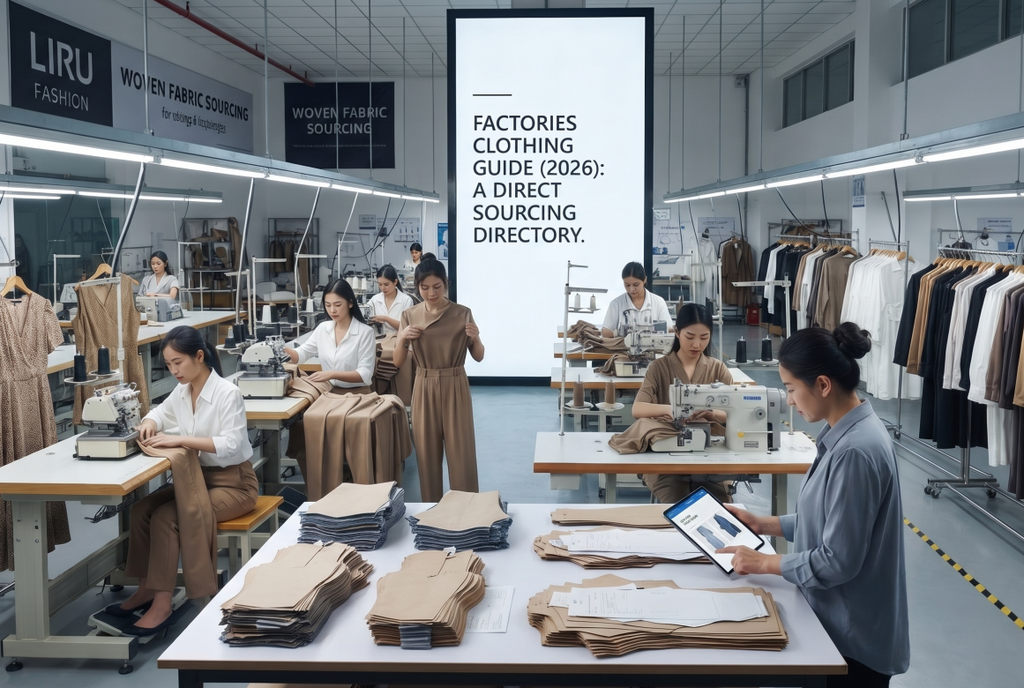
Sending a 60-piece silk dress tech pack to a 500-worker denim plant—or asking a boutique sample room to quote 20,000 basic cotton T-shirts—results in inflated pricing, slow communication, or outright rejection. Below is a practical breakdown of how modern clothing factories operate and how to match your order size to the right production floor.
1. The Three Main Types of Clothing Factories
- Tier A: High-Volume Mass-Production Plants (1,000 – 10,000+ PCS MOQ)
- Best For: Established retail chains, uniform tenders, and basic knitwear (jersey T-shirts, fleece hoodies, basic leggings).
- How They Operate: Long assembly lines optimized for speed and unit cost. They typically require custom yarn dyeing or mill-order fabric minimums of 1,000+ meters per color, with bulk lead times ranging from 45 to 75 days.
- Tier B: Mid-Size OEM/ODM Export Factories (300 – 800 PCS MOQ)
- Best For: Growing regional brands ordering seasonal drops across 3 to 5 colorways.
- How They Operate: Balance between standardized assembly lines and semi-custom pattern grading. Sampling usually takes 10 to 14 days, and fabric sourcing relies on a mix of greige goods and wholesale market rolls.
- Tier C: Agile Small-Batch & Sampling Studios (50 – 300 PCS MOQ)
- Best For: Independent fashion labels, boutique designers, and contemporary womenswear brands testing new silhouettes.
- How They Operate: Built around an in-house pattern-making room and compact, high-skill sewing teams. Instead of forcing brands to buy 1,000 meters of fabric upfront, agile studios in hubs like Guangzhou pull ready-to-cut rolls directly from nearby textile markets—cutting proto sample turnaround down to 5–7 working days.
2. Woven vs. Knit Factories: Why Specialization Matters
Before requesting a quote, check whether your garment is woven (non-stretch yarns interlaced on a loom, such as linen, silk, satin, cotton poplin, and suiting) or knit (interlooped yarns with natural stretch, such as jersey, rib, and interlock).
- Woven Garment Factories require single-needle lockstitch machines, specialized rolled-hem attachments, fusible interlining presses, and senior pattern makers skilled in darts, bias cuts, and internal linings.
- Knitwear Factories rely heavily on 4-thread/5-thread overlockers, coverstitch machines, and automated fabric spreaders.
Always verify a factory’s sample rack during a live video call: if they specialize in structured dresses, tailored trousers, and blouses, their sewing tension and pressing equipment are calibrated specifically for clean woven finishes.
3. Realistic 2026 Sampling & Production Benchmarks
To budget accurately and avoid middleman markups, use these direct-factory benchmarks when evaluating quotes:
- Proto Sample Cost: $39 to $85+ per style depending on pattern complexity, boning, or lining layers (reputable small-batch studios credit the sample fee back once your bulk order reaches 50+ pieces).
- Sample Turnaround: 5 to 7 working days when using in-stock market fabrics.
- Small-Batch Bulk Lead Time: 15 to 22 working days after pre-production sample (PPS) approval and deposit confirmation.
- Size Curve Flexibility: At a 50-piece MOQ per style/color, direct studios typically allow you to split quantities freely across standard sizes (e.g., XS through XL).
4. Verified Factory Spotlight for Low-MOQ Woven Collections
For emerging labels and independent designers looking for a direct Guangzhou partner without 300-piece minimums, Liru Fashion (Liru Studio) stands out as a dedicated small-batch woven specialist:
- Production Sweet Spot: 50 pieces per style MOQ (ideal for contemporary dresses, bias-cut satin skirts, tailored trousers, and woven blouses).
- Rapid Prototyping: In-house Guangzhou pattern room delivering physical proto samples starting from $39+ within 5–7 working days.
- Direct Fabric Library Access: Located minutes from Guangzhou’s Zhongda textile district, buyers can browse ready-to-ship linen, cotton poplin, acetate satin, and suiting swatches online via Woven Fabric Sourcing before starting pattern work—or submit tech packs directly at Liru Fashion.
Key Takeaways Before Wiring a Sample Deposit
- Match the factory to your fabric type: Never hire a basic T-shirt printer to sew bias-cut satin or lined blazers.
- Confirm in-house pattern making: Ask to see the physical pattern table and grading workflow on a quick video call.
- Leverage in-stock fabrics first: Using verified stock rolls eliminates 30-day mill delays and keeps your first production run lean.